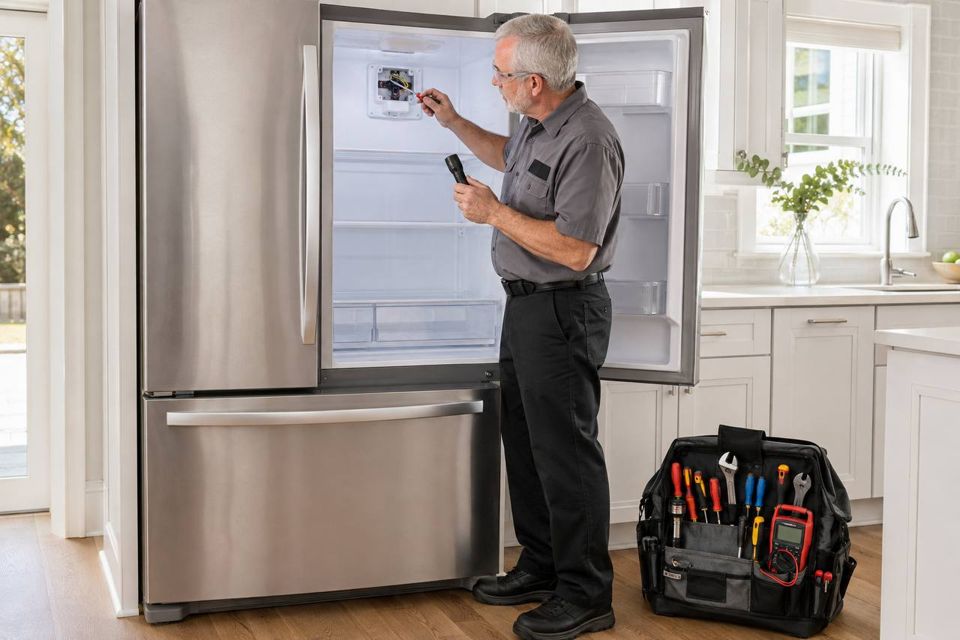
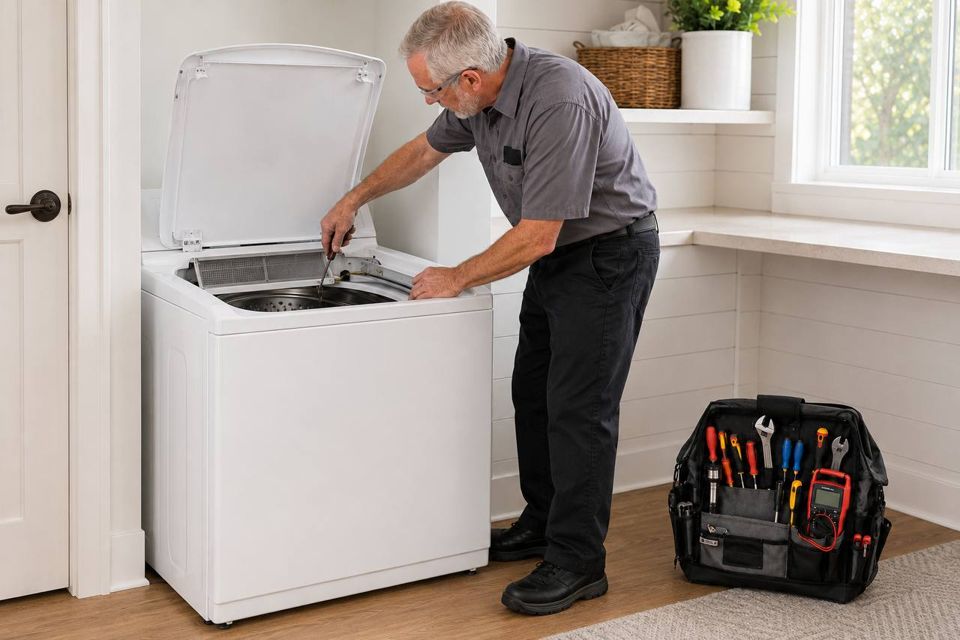
Warm-box calls from North Charleston go to the top of the day. 15 min from the West Ashley shop on the 526 leg, thermometers in both boxes before a panel is opened.
ZIP 29405 · 2941815 min from the shopEvery brand & age
North Charleston is a straight run up 526 from the shop, and a warm refrigerator in Park Circle, off Dorchester Road or in an Ashley Phosphate apartment gets pulled to the first opening rather than waiting for the scheduled leg. Fifteen minutes on a normal morning; a warm-box call before ten is usually cold again by mid-afternoon.
The walk-through takes its ordered readings the same way at every address, and in North Charleston it leans on two of them: the supply voltage in the renovated bungalows, where half the wiring is new and half is not, and the ambient temperature in the garage utility rooms of the 70s subdivisions, where a second refrigerator spends the summer at ninety-five degrees.
Refrigerator Repair on the 526 leg — North Charleston
Tell dispatch if you notice
Compressor never shuts off, box never gets cold
Went warm after a thunderstorm and never came back
Milk going off while the ice cream stays frozen
A click from behind it every few minutes, then silence
Which parts of North Charleston do you cover? Everything south of the airport — Park Circle, the Navy Yard side, the Dorchester Road subdivisions, the Rivers and Ashley Phosphate corridors — on a scheduled 526 leg. Goose Creek and Ladson are past the line and dispatch says so.
Local findings
Mixed Wiring, Garage Heat, and the Landlord’s Fleet
Park Circle’s renovated bungalows put a new refrigerator on a circuit that is original from the panel to the kitchen wall and new from there on. Under a compressor start the old half sags, the overload trips, and the cabinet clicks and goes silent in a way that looks exactly like a dead relay. Reid clamps the compressor and watches the line voltage while it starts before any part is named, and the readings go to the household’s electrician in the house file when the wiring owns the fault. When it does not, a relay, a defrost heater or a damper is a routine repair.
The Dorchester Road ranches keep their second refrigerator in an unconditioned garage, and a North Charleston garage in August is hotter than any spec sheet allows for. The compressor runs near its edge, the start relay cooks, the condenser mats with lint and dog hair, and a cabinet that has done twenty summers out there earns an honest ticket — sometimes a relay and a coil cleaning, sometimes a plain line recommending that the household stop spending.
Also on this run. The Rivers Avenue and Ashley Phosphate complexes run refrigerators as a fleet — one model installed across a building in the same year and failing as a class — and their owners get the landlord’s house file: findings, ticket and a keep-or-retire verdict per unit, with the visit turned around on the same 526 leg so a tenant is not without a refrigerator for a week.
Three questions
Refrigerator Repair in North Charleston — Answered
Fridge in our Park Circle bungalow clicks and quits.
Voltage under load gets read first — a circuit that is half old and half new can knock out a healthy compressor’s overload. If the supply holds, relay and compressor are measured and the ticket names the part.
Garage fridge off Dorchester Road dies every summer.
A start relay cooked by garage heat or a compressor at its edge. Both get measured, and the ticket gives an honest keep-or-retire line for a cabinet that age.
Do you handle refrigerators for an apartment complex?
Yes — a house file per unit, a ticket the owner can forward, and the pattern across the building noted so the next unit’s part is already on the truck.
Your number, the ZIP, the street, the machine, the complaint. Dispatch rings you back with a time.
A week on the map
Hoses older than the machine replaced on the spotThermometers in both boxes before anything is openedPropane conversions checked burner by burnerAnchored and leveled during the same callAirflow at the hose before the element is blamed