Ice Maker Repair — West Ashley, Charleston & the Islands
Between May and October nobody in Charleston calls a dead ice maker a minor problem — and most of them turn out to be a single short visit once the water line is traced instead of the whole assembly swapped on a guess.
Every brand & ageSame-day slots most weekdaysTicket before the work
In-door, under-counter and standalone units · every one of the eight areas
Ice Maker Repair inside the twenty-five-minute map
The water line
The Walk-Through on a Ice Maker
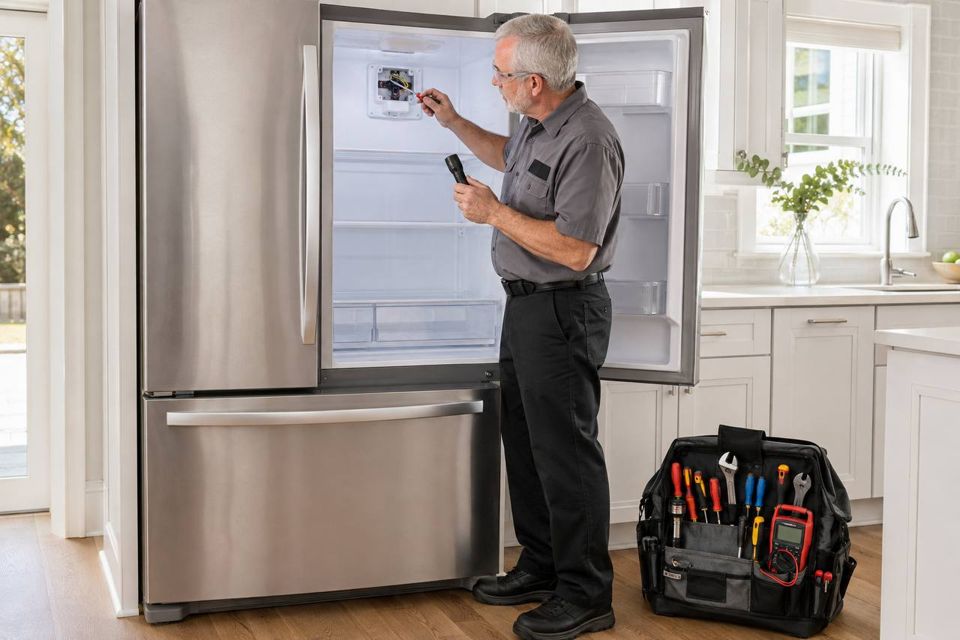
Reid walks the water, not the module: the stop valve, then the inlet solenoid tested under pressure, then a light down the fill tube looking for a plug of ice, then the filter’s date, then the module cycled by hand, and finally one full harvest watched from fill to drop. The assembly itself is guilty far less often than the internet says; the solenoid, the tube and the filter give out first and cost a fraction, and the ticket is written on what the harvest showed.
A harvest watched start to finish
Walking the Water Line
A fill tube frozen solid, a solenoid crusted with scale, a filter years past its date — those three explain most of the silent ice makers on the map. On the island wells the scale and the iron arrive early and the filter clogs long before its printed date; on Charleston Water the usual story is neglect — a filter nobody has touched since the kitchen was redone — plus a freezer running warm enough in a ninety-degree garage that the harvest never finishes.
Under-counter and standalone machines turn up in Mount Pleasant and downtown entertaining kitchens, in Folly rental houses and on the docks along Shem Creek and the Ashley, and they get their own version of the walk-through: condenser cleanliness, the circulation pump, the evaporator plate, the bin-full sensor. Salt air eats their condensers near the water, and a proper cleaning is very often the whole job.
Ice that tastes wrong is a water-line problem rather than a freezer problem. A new filter and a few thrown-away batches fix most of it; a sulfur or iron taste on a well points at the treatment system, and the house file says so instead of selling a part that would change nothing.
Tell dispatch if you notice
No trickle, no clunk, nothing in the bin
Cubes tiny, hollow or tasting of the fridge
Everything in the bin fused into one lump
Worked all winter, gave up in June
Ice on the freezer floor under the fill tube
Under-counter machine runs all day and makes nothing
Book Ice Maker Repair
Your number, the ZIP, the street, the machine, the complaint. Dispatch rings you back with a time.
Symptom to first check
Where the Walk-Through Starts
Cheap and probable gets measured before expensive and unlikely gets mentioned.
What you notice
What the walk-through checks first
No trickle, no clunk, empty bin
Inlet solenoid under pressure, fill tube, module cycle
Tiny or hollow cubes
Fill volume, water pressure, filter date
Bin fused into a lump
Freezer temperature, bin sensor, door seal
Gives up in June
Ambient stress, condenser, solenoid pressure
Ice on the freezer floor
Fill tube iced over, cracked mold
Under-counter runs, makes nothing
Circulation pump, evaporator plate, bin sensor
Asked before booking
Ice Maker Repair — Answered
The ice has tasted off since spring.
An old filter or water that has sat in the line, nearly every time. Change the filter, dump the next few batches, and if the taste survives, the reservoir and tubing get cleaned — or, on a well, the treatment system gets a look.
The ice maker only dies in hot weather.
Either the freezer is running at the top of its range or the solenoid is barely making pressure, and a hot kitchen or garage pushes it over. Each is measured, and the summer-only pattern actually shortens the list.
Does the whole assembly need replacing?
Rarely. The solenoid, the tube or the filter is the failure most of the time, and watching one harvest before ordering anything is what keeps the expensive part unsold.
By area
Ice Makers, Neighborhood by Neighborhood
Salt on the beach, scale on the wells, neglect in the city — each area’s page notes what the local water does to a valve.