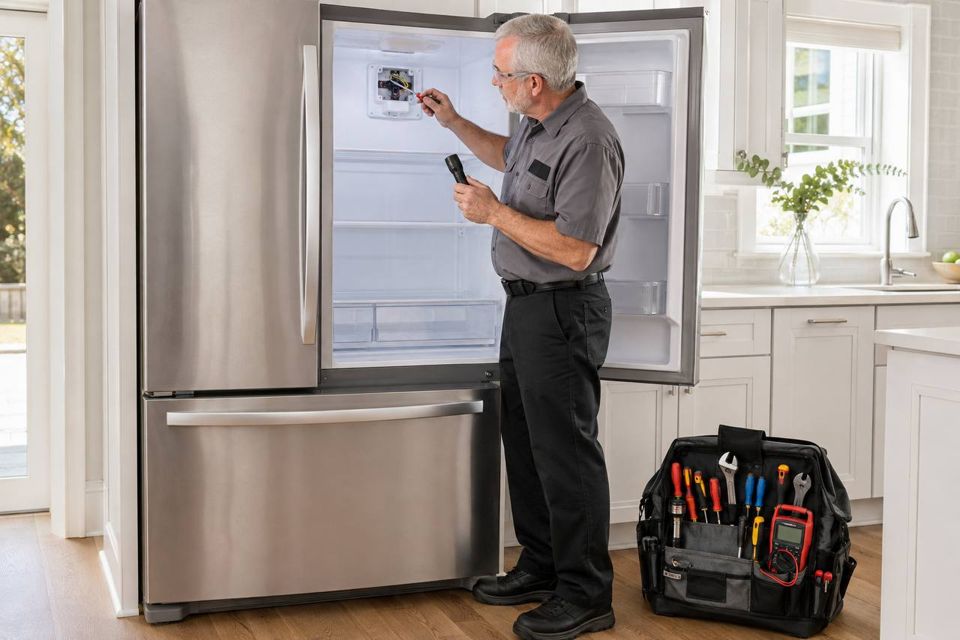
Refrigerators, washers, dryers, cooking, dishwashers and ice makers — a page apiece on what gets measured first and what a Charleston house tends to add.
Thermometers, frost, coil, fans, compressor amps — then the verdict. Warm boxes go to the top of the day.
Read the pageWhichever stage fails is run with the water on until it fails in front of you.

Read the pageThe vent gets a pressure reading before the element gets a meter. Half of Charleston’s slow dryers are ducts.

Read the pageA thermometer in the cavity, a flame checked at every burner, propane conversions done right.

Read the pageKick panel off and a light into the pan under the tub before the racks even come out.

Read the pageThe water line walked from the stop valve to the bin; the assembly is the last suspect, not the first.

Read the pageThat single rule shapes all six pages above. Each one lays out the order of the walk-through — what gets measured first, what second — and what a Charleston house is likely to add on top: humidity on the plugs, salt on the coil, a vent that takes the long way because a raised floor or a review board forced it, a well that crusts a valve, a thunderstorm that left a board frozen halfway. Those are findings, and when they apply the ticket names them.
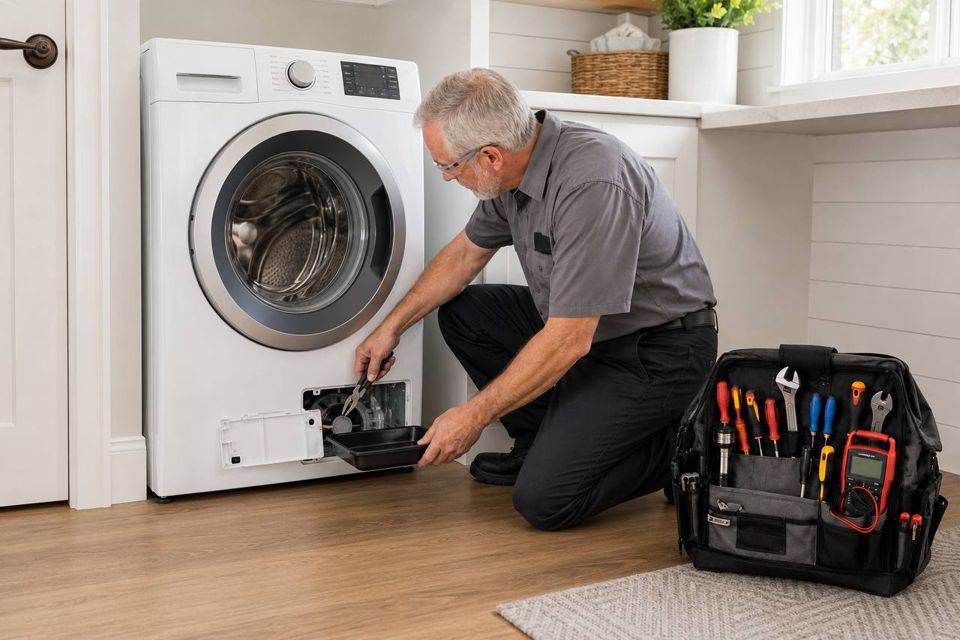
The same walk-through applies to every brand and every decade. The shop is independent, claims no factory authorizations, has no appliances to sell, and writes keep-or-retire verdicts backed by nothing but arithmetic.
Describe what the machine is doing on the call and dispatch will tell you what the walk-through looks at first.